CETC Tier-1 distributor Jarwey|SiC vs SJ: cost, delivery, 15V/0V gates
Industry coverage keeps repeating the same headline: SiC MOSFETs are replacing silicon superjunction / CoolMOS™-class devices in server PSUs, OBC, PFC, and mid-power SMPS. For buyers and power-project owners, the hard questions are usually not “is SiC better?” but three gatekeepers:
Jarwey is a Tier-1 distributor of SiC power devices from CETC Guiji Nanfang (CETC 55 Institute), a subordinate unit of China Electronics Technology Group (CETC)—selection support, datasheets, sampling & small batch, lead-time coordination.
- Is device cost controllable (near or below comparable imported SJ)?
- How much gate-drive / PCB rework is required (many SiC notes assume +18 V / negative turn-off)?
- Delivery and second-source risk when SJ allocation tightens.
Jarwey (CETC SiC Tier-1 distributor) supplies CETC / 55th Institute G3 SiC MOSFETs—e.g. WM3HA300065E, WM3HA330090E, WM3HA160065E—are positioned against those three gates: SiC switching behavior, 15 V / 0 V gate drive closer to silicon SJ habits, and cost-aware delivery support.
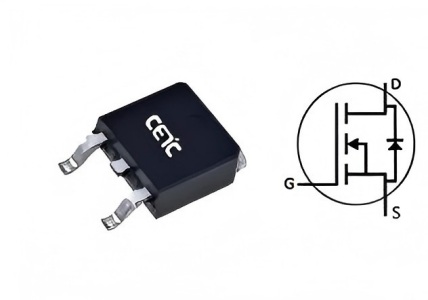
Gate 1 — Cost: unit price vs system BOM
Chinese industry notes already claim some 650 V SiC ASPs approach or undercut imported SJ—especially once magnetics and heatsinking shrink after a frequency step-up. When you evaluate CETC parts:
- Compare hot RDS(on), not only 25 °C datasheet numbers
- Include heatsink / magnetics / fan / enclosure in the spreadsheet
- Lock efficiency, rise, and EMI on samples before negotiating volume price ladders
For the parameter table and 7-step checklist, see our earlier guide: SiC MOSFET vs CoolMOS SJ. This article stays on procurement and bring-up.
Gate 2 — Gate drive: +18 V/−V vs CETC 15 V / 0 V
Bridge-replacement articles repeatedly warn about drive voltage, Miller, loop inductance, and EMI. Platforms that need +18 V on / negative off force auxiliary rails and often a PCB respins on silicon SJ boards that ran 12–15 V / 0 V.
CETC G3 explicitly supports 15 V turn-on / 0 V turn-off, closer to flyback controllers and CoolMOS™-class habits—so second-source trials can start with less drive-board surgery. High-dv/dt half-bridges still need RGoff / layout review: 15 V / 0 V is not “no validation.”
Gate 3 — Delivery and second source
During SJ allocation or price waves, a qualified SiC path is also a supply hedge:
- Second source when imported SJ lead times stretch
- Sample / small-lot / production cadence coordinated through Jarwey
- Datasheets already on the product pages for download
Suggested evaluation PNs
- WM3HA160065E — 650 V, lower RDS(on) flyback/adapter tier
- WM3HA300065E — 650 V SMPS / PFC / aux silicon→SiC
- WM3HA330090E — 900 V higher-bus industrial adapters
- WM2HA020120L — 1200 V higher-power tier when needed
Next step
Send your current SJ PN, topology, gate drive, and power target to Jarwey for a mapped candidate, datasheet pack, and sample plan.
Contact: kerry.w@jarwey.cn · Contact
Replacement is not a pin-to-pin guarantee; qualify against the latest datasheet and board measurements before production.
Jarwey · CETC SiC Tier-1 distributor · kerry.w@jarwey.cn · Contact.
Related Articles